
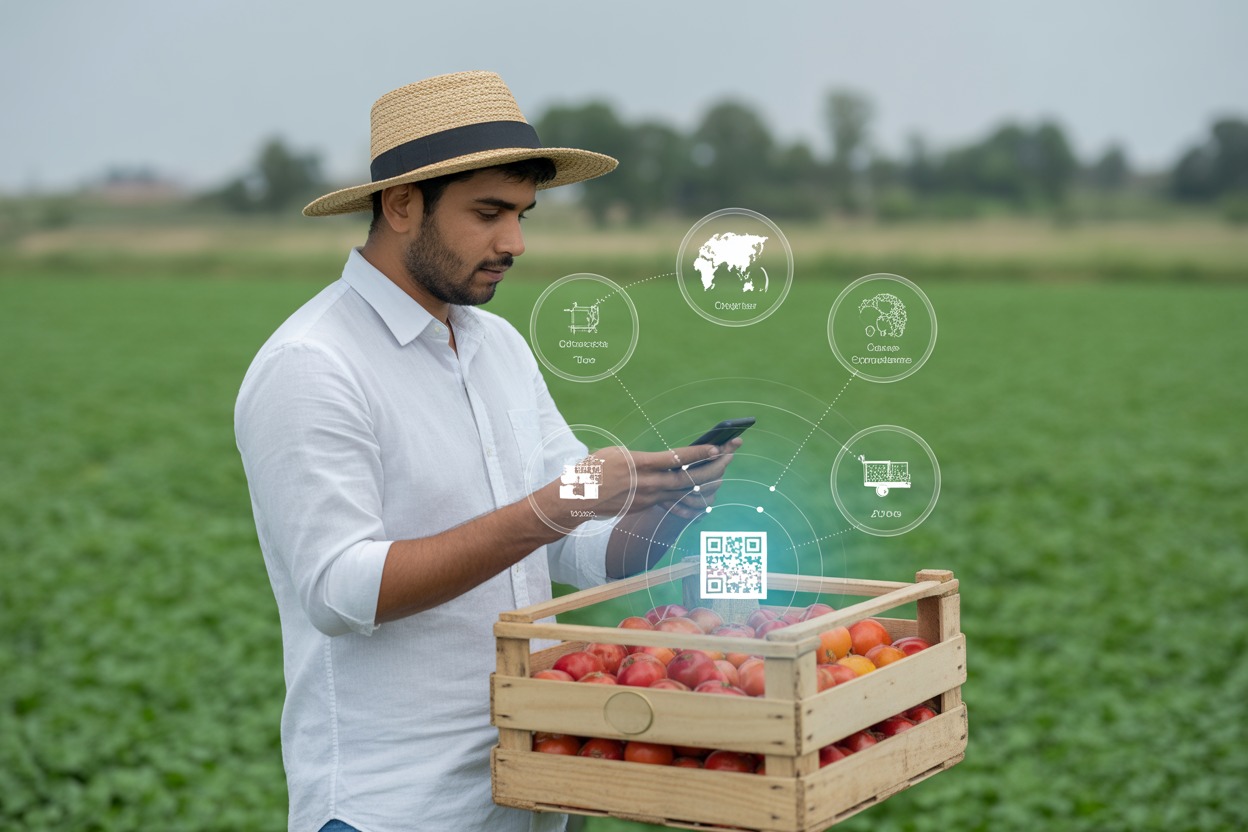
Traceability Alone Is No Longer Enough
For years, agricultural traceability meant being able to trace a product back to its origin.
In 2026, audit-ready agricultural traceability has emerged as the new expectation —
one that goes beyond tracking to proving compliance at the farm level.
Buyers, regulators, and auditors are no longer asking:
- Where did this come from?
They are asking:
- Can you prove how it was produced?
- Is the data verifiable at the farm-activity level?
- Can this data withstand an audit today — not later?
This shift marks the rise of a new expectation in agriculture:
audit-ready by default.
What “Audit-Ready by Default” Means in Agricultural Traceability
Traditional agricultural audits are reactive:
- Manual data collection before inspections
- Excel-based reconciliation
- Retroactive corrections
- High dependency on individuals
Audit-ready agricultural traceability systems change this model entirely. They ensure:
- Farm activities are captured digitally at the time of execution
- Every record is time-stamped, geo-tagged, and user-attributed
- Reports are generated continuously
- Data integrity is preserved throughout the season
Audit readiness is no longer an event — it is a continuous operational state.
Why Audit-Ready Agricultural Traceability Is Accelerating in 2025–2026
1. ESG Audits Are Moving to the Farm Level
Environmental and social audits increasingly require verifiable farm-level evidence, including:
- Input usage per crop cycle
- Activity-level emission data
- Water and chemical application records
- Verified labor and operational logs
Without digital farm records, ESG audits in agriculture do not scale.
2. Buyers Are Replacing Trust With Verification
Large buyers and exporters now demand proof generated directly from traceability software:
- System-generated compliance reports
- Immutable activity histories
- Restricted editing and approval trails
Traceability without verification is increasingly treated as operational and reputational risk.
3. Retroactive Data Is Becoming a Compliance Liability
Auditors routinely flag:
- Backdated entries
- Unverified edits
- Missing activity logs
As highlighted by global food safety and sustainability bodies such as GLOBALG.A.P.,real-time, field-level data capture is becoming non-negotiable for compliance.
Traditional Traceability vs Audit-Ready Agricultural Traceability
| Aspect | Traditional Traceability | Audit-Ready Traceability |
|---|---|---|
| Core purpose | Track product movement | Prove compliance |
| Data capture | Periodic and manual | Real-time, activity-level |
| Audit preparation | Reactive | Continuous |
| Data integrity | Editable, weak trails | Time-stamped, role-based |
| ESG readiness | Partial | Built-in |
| Audit risk | High | Significantly reduced |
The Role of Digital Farm Records in Audit-Ready Traceability
Audit-ready agricultural traceability begins at the farm. Key components include:
- Activity-wise data capture (sowing, spraying, harvesting)
- Geo-tagged farm plots and GPS boundaries
- Role-based approvals and verification workflows
- Auto-generated reports mapped directly to raw data
Platforms like Trace AgTech embed these capabilities directly into daily operations,
turning routine farm activities into verifiable audit evidence.
Request a demo to see audit-ready traceability in action
Conclusion: Audit-Ready Is the Future of Agricultural Traceability
The future of agricultural traceability is not louder dashboards or bigger claims.
- Truth captured at the source
- Integrity preserved over time
- Audits that require minimal preparation
In 2026, the real question is no longer:
“Do you have traceability?”
It is:
“Are you audit-ready — right now?”

Any comments?