
Biodiversity in Agroecology: The Cornerstone of Sustainable Farming
In the quest for sustainable agriculture, agroecology stands out as a holistic approach that emphasizes the importance of biodiversity. Biodiversity, the variety of life in all its forms and interactions, is crucial for the resilience and productivity of ecosystems. In agroecology, it plays a central role in creating farming systems that are not only productive but also environmentally sound and socially equitable.
Understanding Agroecology
Agroecology is more than just a set of agricultural practices; it is a science, a movement, and a way of life. It integrates principles from ecology, agronomy, and social sciences to design and manage sustainable agroecosystems. The goal is to enhance the interactions between plants, animals, humans, and the environment for the benefit of all.
The Role of Biodiversity in Agroecology
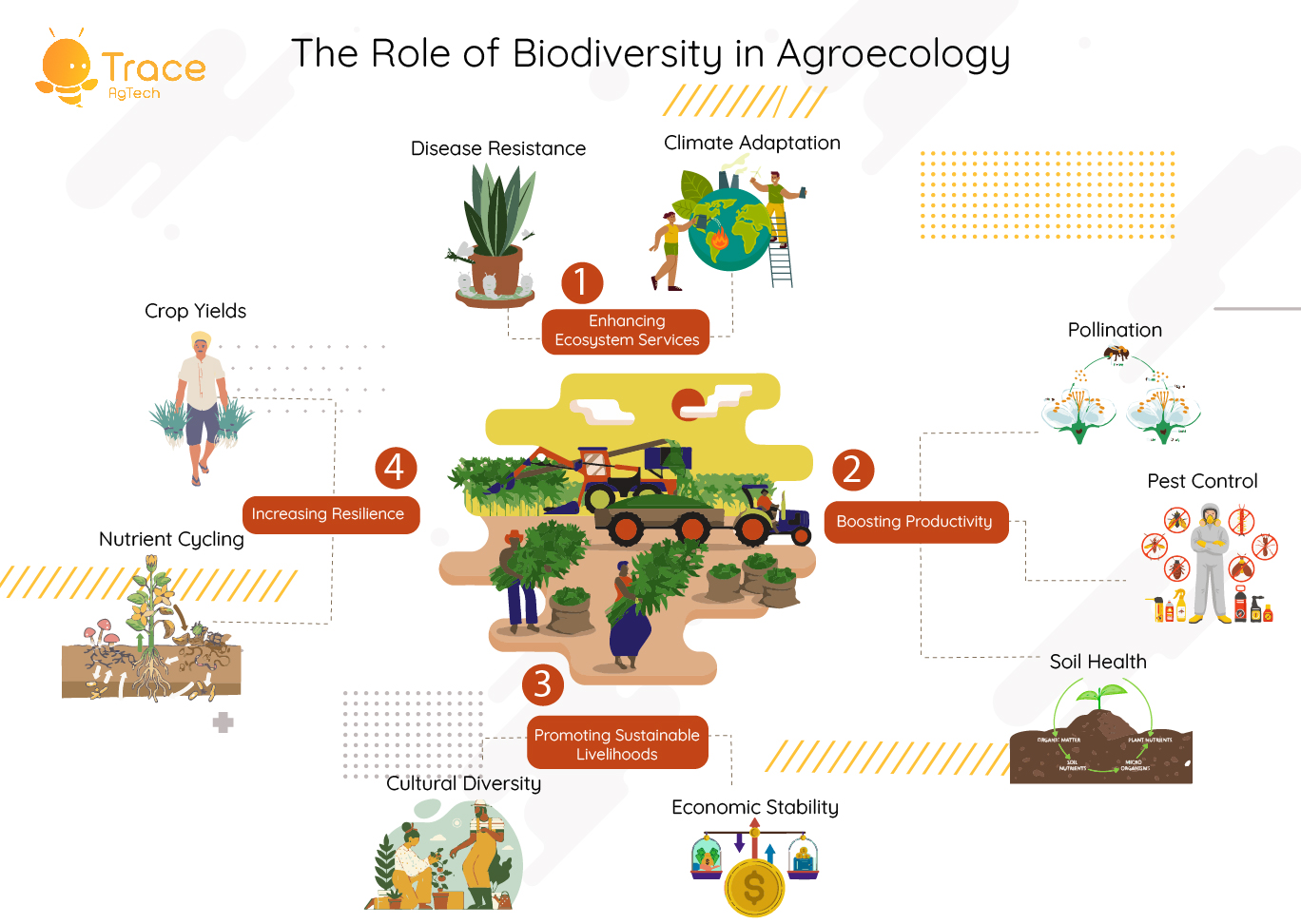
Biodiversity in agroecology refers to the variety and variability of living organisms in farming systems. This includes genetic diversity (within species), species diversity (between species), and ecosystem diversity (across landscapes). Here are some ways biodiversity contributes to agroecology:
- Enhancing Ecosystem Services:
- Pollination: Diverse plant species attract a variety of pollinators, ensuring better crop yields.
- Pest Control: Natural predators and beneficial insects help manage pest populations, reducing the need for chemical pesticides.
- Soil Health: A variety of plant roots and soil organisms improve soil structure, fertility, and water retention.
- Increasing Resilience:
- Climate Adaptation: Diverse ecosystems are more resilient to extreme weather events and climate change, as they have multiple species that can adapt to changing conditions.
- Disease Resistance: Biodiverse farms are less susceptible to outbreaks of pests and diseases because pathogens are less likely to spread in a heterogeneous environment.
- Boosting Productivity:
- Crop Yields: Polycultures (growing multiple crop species together) can lead to higher overall yields compared to monocultures.
- Nutrient Cycling: Different plants have varying nutrient requirements and contributions, leading to more efficient nutrient use and cycling in the ecosystem.
- Promoting Sustainable Livelihoods:
- Cultural Diversity: Agroecology respects and incorporates traditional knowledge and practices, supporting cultural diversity and community resilience.
- Economic Stability: Diversified farms are less reliant on a single crop or market, providing more stable income sources for farmers.
The Role of Biodiversity in Agroecology
Practical Applications of Biodiversity in Agroecology
- Crop Rotation and Polyculture: Rotating crops and growing multiple species together can enhance soil health and reduce pest pressures.
- Agroforestry: Integrating trees and shrubs into agricultural landscapes can provide shade, improve soil quality, and offer additional products like fruits, nuts, and timber.
- Cover Cropping: Planting cover crops during off-seasons protects soil from erosion, improves soil fertility, and supports beneficial insects.
- Intercropping: Growing different crops in proximity can lead to mutual benefits, such as pest suppression and improved nutrient use.
Challenges and Opportunities
While the benefits of biodiversity in agroecology are clear, there are challenges to its widespread adoption. These include a lack of awareness, limited access to diverse seeds and planting materials, and policies that favor conventional farming practices. However, there are also significant opportunities:
- Education and Training: Increasing awareness and understanding of agroecological principles among farmers, policymakers, and consumers.
- Research and Innovation: Supporting research into biodiverse farming systems and developing new technologies and practices.
- Policy Support: Advocating for policies that promote agroecology and biodiversity, such as subsidies for sustainable practices and conservation programs.
Conclusion
Biodiversity is the cornerstone of agroecology, providing the foundation for sustainable and resilient farming systems. By embracing biodiversity, we can create agricultural landscapes that are productive, environmentally friendly, and socially equitable. As we face the challenges of climate change, resource depletion, and food security, agroecology offers a promising path forward, rooted in the natural diversity of life.

Any comments?