

Cloud Computing: The Benefits in Farm Management Systems
Introduction
The agriculture industry is undergoing a rapid digital transformation, with technological advancements playing a crucial role in improving efficiency, productivity, and sustainability. Among these innovations, cloud computing has emerged as a game-changer in farm management systems, enabling farmers to leverage data-driven insights, optimize resources, and enhance decision-making. By integrating cloud-based solutions, farms of all sizes can streamline operations, reduce costs, and improve overall management.
In this blog, we will explore the key benefits of cloud computing in farm management systems and how it is revolutionizing modern agriculture.
Enhanced Data Management and Storage
One of the primary benefits of cloud computing in farm management systems is the ability to store, manage, and analyze large amounts of agricultural data. Farms generate vast amounts of data from various sources, including sensors, drones, weather stations, and IoT devices. Cloud computing provides a centralized platform for farmers to securely store and access this data anytime, anywhere.
Advantages:
-
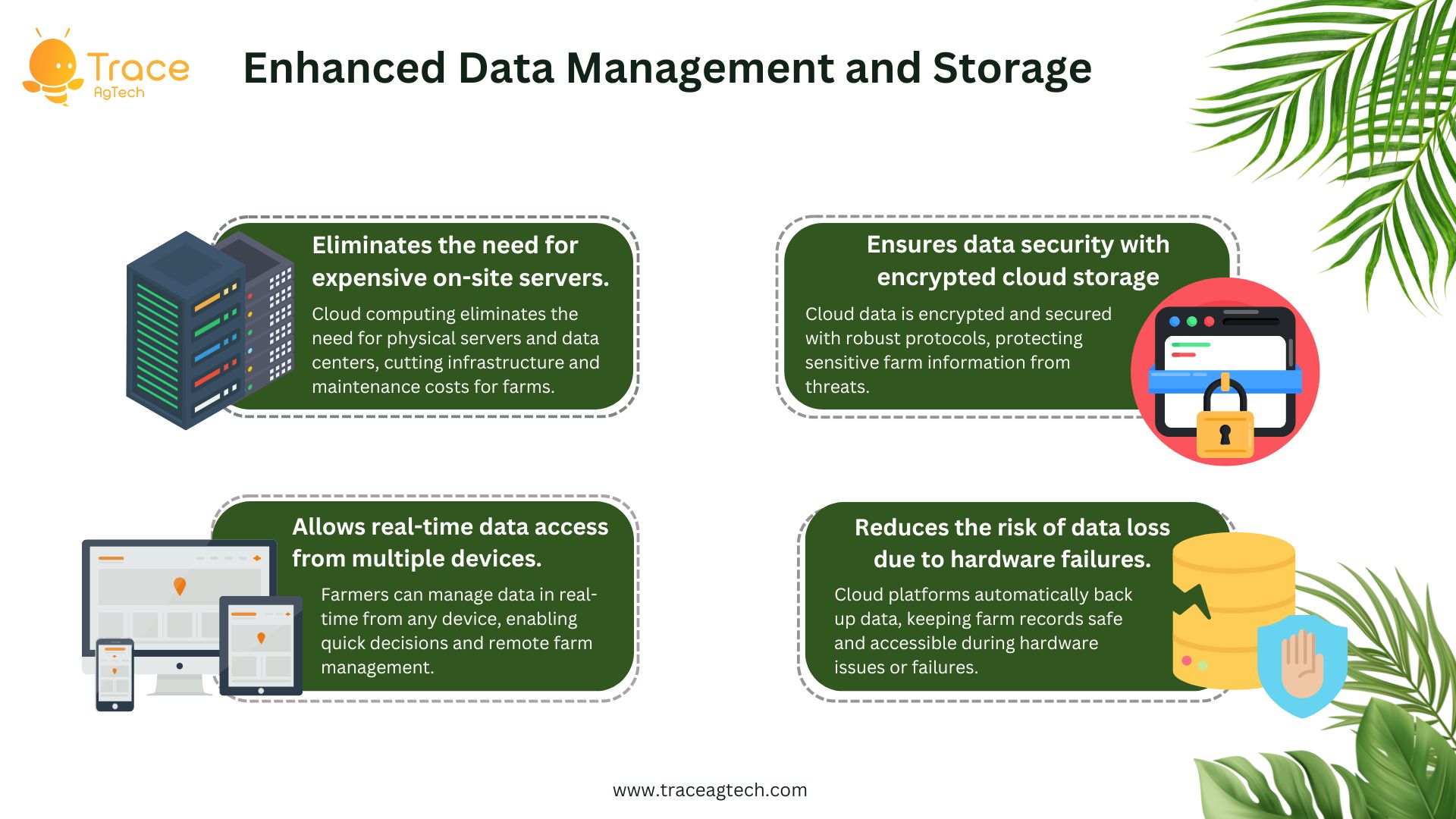
Eliminates the need for expensive on-site servers: Cloud computing removes the requirement for physical servers and data centers, reducing infrastructure costs and maintenance expenses for farms.
-
Ensures data security with encrypted cloud storage: Data stored on the cloud is encrypted and safeguarded with robust security protocols, protecting sensitive farm information from unauthorized access and cyber threats.
-
Allows real-time data access from multiple devices: Farmers can access and manage their data from smartphones, tablets, or computers in real-time, enabling quick decision-making and remote farm management.
-
Reduces the risk of data loss due to hardware failures: Cloud platforms automatically back up data, ensuring that farm records remain safe and accessible even in cases of hardware malfunctions or unexpected failures.
By leveraging cloud-based data management, farmers can make informed decisions based on accurate and up-to-date information, leading to increased efficiency and productivity.
Additionally, cloud platforms often integrate with advanced analytics tools, enabling farmers to extract meaningful insights from their data. For example, they can analyze historical weather patterns, soil conditions, and crop growth trends to plan optimal planting and harvesting schedules. These insights help in reducing waste, improving yields, and making data-backed agronomic decisions.
Improved Farm Operations and Automation with Cloud Computing
Cloud computing enhances farm operations by integrating automated systems that streamline processes such as irrigation, fertilization, pest control, and harvesting. Cloud-based platforms allow farmers to control and monitor these operations remotely, improving efficiency and reducing manual labor.
Key Applications:
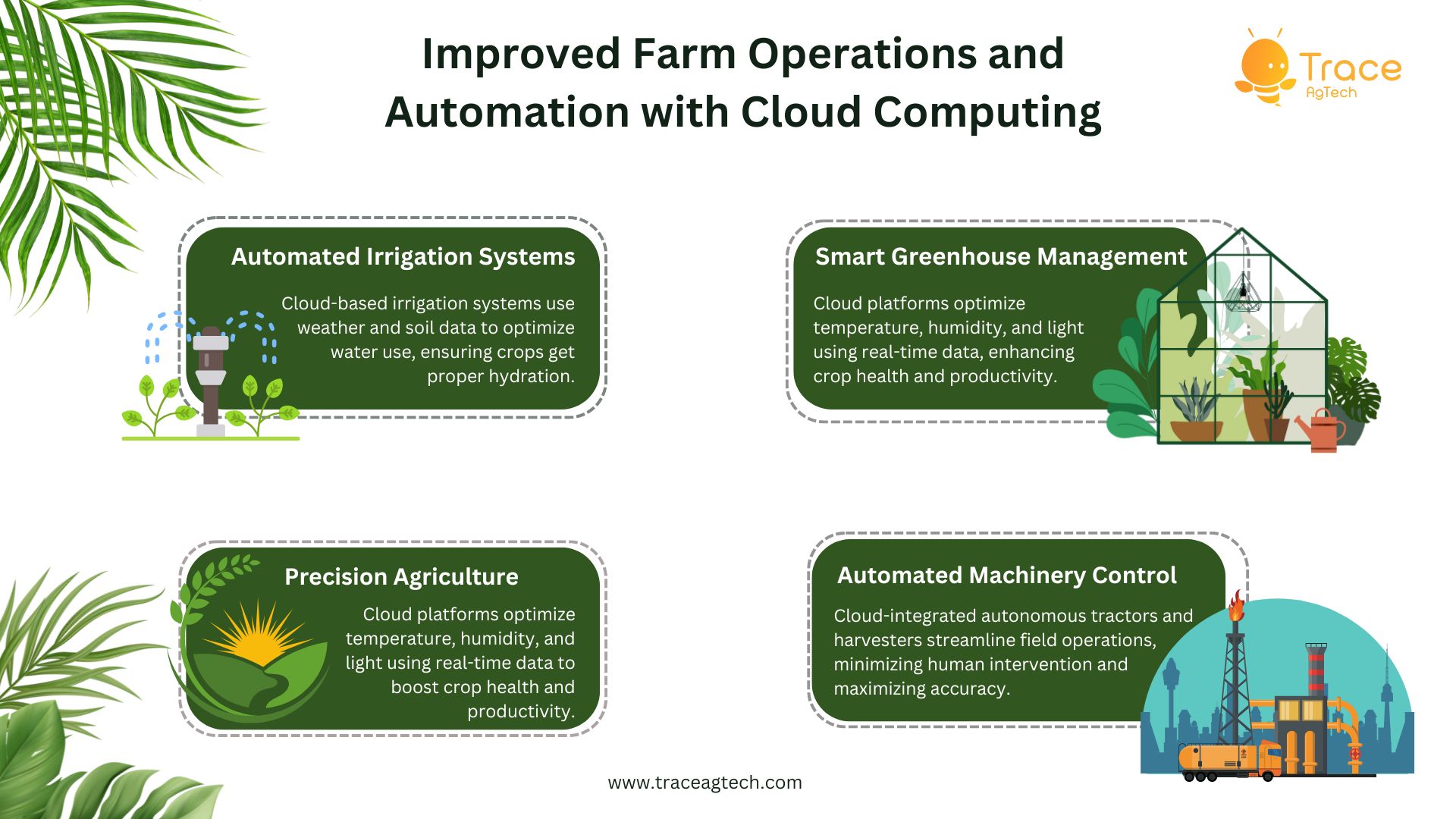
- Automated Irrigation Systems: Cloud-based irrigation systems analyze weather and soil data to optimize water usage, ensuring crops receive the right amount of hydration.
- Smart Greenhouse Management: Cloud platforms regulate temperature, humidity, and light conditions based on real-time data, maximizing crop health and productivity.
- Precision Agriculture: Cloud computing enables precision farming techniques that optimize input usage, reducing excess fertilizer, pesticide, and water consumption while maximizing crop yields.
- Automated Machinery Control: Cloud-integrated autonomous tractors and harvesters optimize field operations, reducing the need for human intervention and enhancing operational accuracy.
By automating essential farming activities, cloud computing reduces human error and improves overall productivity, making farms more resilient and efficient.
Real-Time Monitoring and Decision-Making
Farmers can leverage cloud computing to access real-time data from various sources, enabling better decision-making. Cloud-based farm management systems integrate IoT devices and AI-powered analytics to provide actionable insights for crop health, livestock management, and equipment maintenance.
Examples:
- Livestock Monitoring: Cloud-connected wearable sensors track animal health, feeding patterns, and movement, allowing farmers to detect illnesses early and optimize breeding programs.
- Drone Surveillance: Drones capture real-time images of fields, which are analyzed through cloud-based AI systems to detect diseases and pests before they spread, minimizing crop loss.
- Equipment Maintenance: Cloud systems predict machinery failures and schedule maintenance before breakdowns occur, reducing downtime and repair costs.
Real-time monitoring ensures proactive farm management, reducing losses, increasing productivity, and enhancing sustainability.
Cost Savings and Scalability
Cloud computing significantly reduces the cost of implementing and maintaining farm management systems. Unlike traditional IT infrastructure, which requires substantial investments in hardware, software, and IT personnel, cloud-based solutions offer cost-effective alternatives with scalable features.
Cost-Saving Aspects:
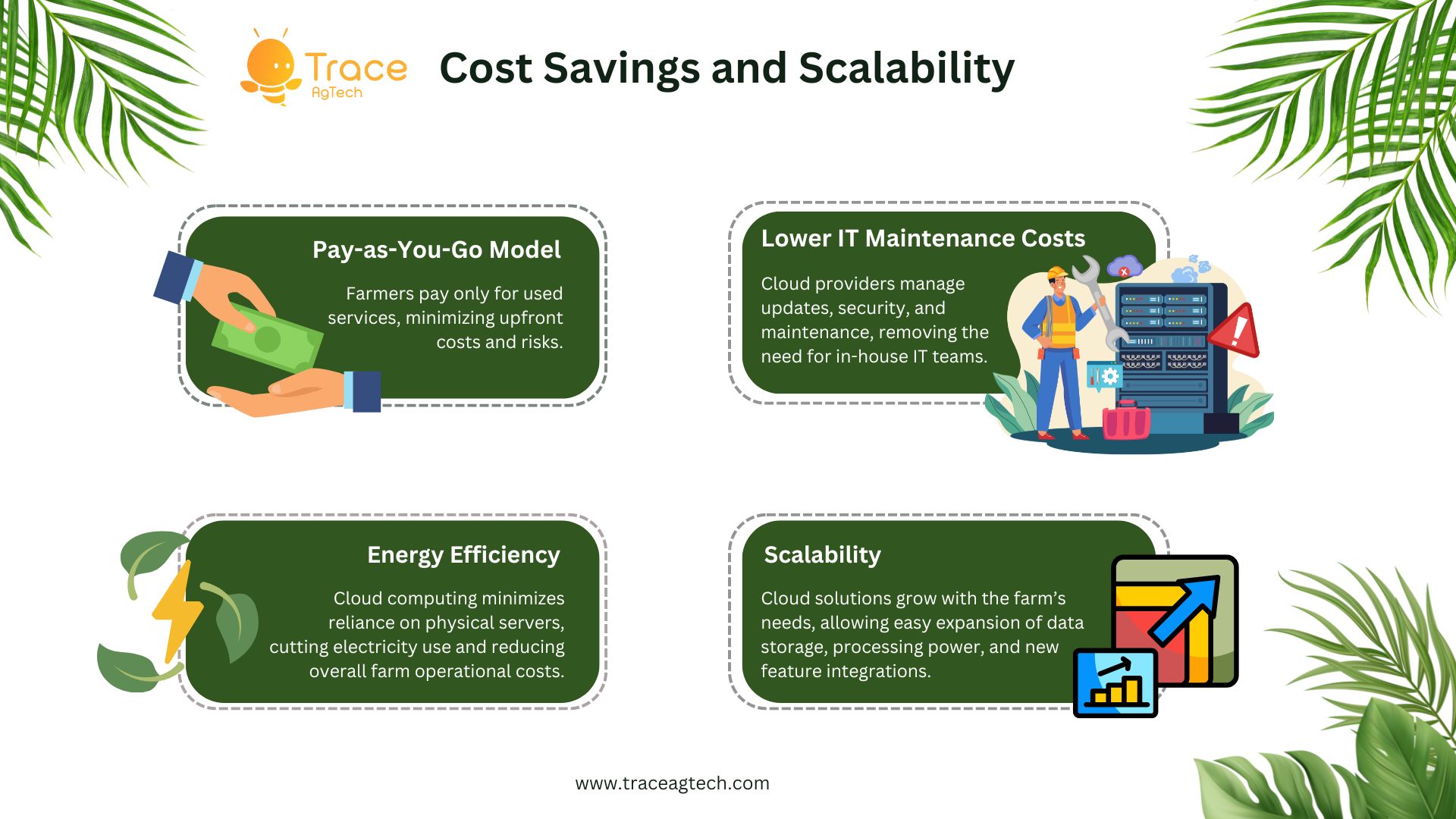
- Pay-as-You-Go Model: Farmers only pay for the services they use, reducing upfront expenses and financial risks.
- Lower IT Maintenance Costs: Cloud service providers handle updates, security, and maintenance, eliminating the need for in-house IT teams.
- Energy Efficiency: Cloud computing reduces the need for physical servers, lowering electricity consumption and overall farm operational costs.
- Scalability: Cloud solutions grow with the farm’s needs, allowing easy expansion of data storage, processing power, and new feature integrations.
By utilizing cloud-based infrastructure, even small-scale farmers can access advanced farm management solutions without significant financial investment.
Enhanced Collaboration and Connectivity
Cloud computing fosters collaboration by enabling seamless communication between farmers, suppliers, agronomists, and other stakeholders. Cloud-based farm management systems provide a unified platform where data can be shared, analyzed, and discussed in real time.
Collaboration Benefits:
- Supply Chain Integration: Cloud platforms connect farmers with suppliers, improving inventory management, logistics, and timely delivery of inputs.
- Remote Advisory Services: Farmers can consult with agricultural experts through cloud-based platforms, gaining insights on best farming practices and disease control.
- Market Access: Cloud computing enables direct access to online marketplaces, helping farmers sell produce efficiently and receive fair market prices.
Enhanced connectivity ensures better coordination and improved business relationships across the agricultural value chain, promoting efficiency and economic stability.
Case Study: Trace AgTech’s Success with Cloud Computing
Background: Trace AgTech, an innovative agricultural technology company, specializes in providing cloud-based farm management solutions to farmers worldwide. The company recognized the challenges farmers faced in managing data, optimizing resource allocation, and ensuring supply chain transparency. Traditional farming methods lacked real-time insights, leading to inefficiencies and increased costs.
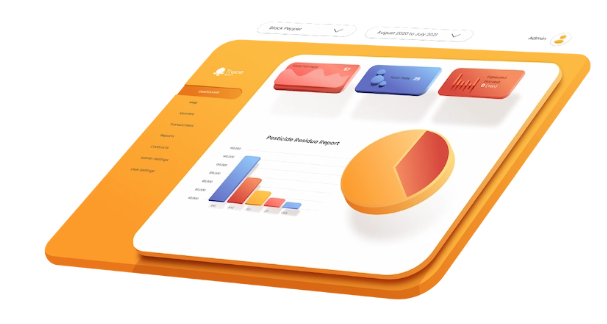
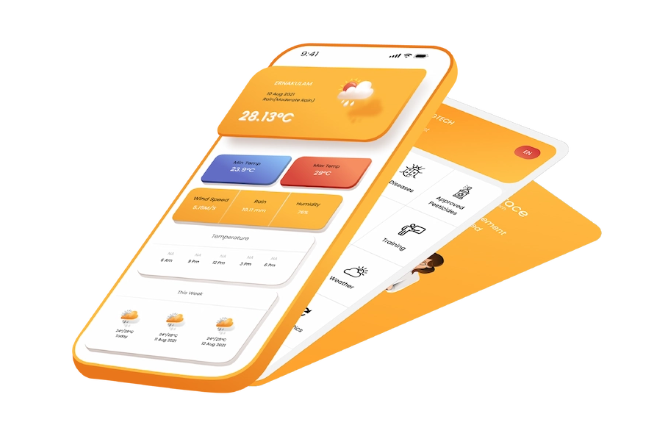
Implementation of Cloud Computing: To address these issues, Trace AgTech developed a cloud-powered farm management platform integrating IoT sensors and remote monitoring capabilities. Businesses using Trace AgTech’s platform could access real-time data on soil health, weather conditions, crop growth, and logistics through a mobile-friendly dashboard.
Results:
- Improvement in Resource Efficiency: Farmers using the platform optimized water, fertilizers, and pesticides based on data-driven insights, reducing waste and costs.
- Increase in Yield: Precision farming solutions enabled better planting strategies and crop management, leading to improved productivity.
- Enhanced Supply Chain Transparency: Cloud-based traceability ensured that consumers and retailers had real-time access to information about the origin and quality of agricultural produce.
- Remote Farm Management: Farmers could monitor and control farm operations from anywhere, reducing the need for physical presence and improving efficiency.
Conclusion: By leveraging cloud computing, Trace AgTech revolutionized farm management, providing farmers with smarter tools for decision-making, efficiency, and sustainability. Their success story highlights the transformative potential of cloud-based technologies in modern agriculture.
Future Prospects of Cloud Computing in Agriculture
The future of cloud computing in farm management systems looks promising, with continued advancements expected to drive further innovation. Some potential developments include:
- AI-Driven Decision Support Systems: Cloud computing will enable more sophisticated AI models for enhanced decision-making.
- 5G Connectivity: Faster internet speeds will improve real-time data transmission and remote farm management.
- Enhanced Predictive Analytics: Advanced machine learning models will provide even more accurate forecasts for weather, yield, and pest control.
- Personalized Farming Solutions: Cloud platforms will offer customized recommendations based on farm-specific data.
As technology continues to evolve, cloud computing will remain a cornerstone of modern agricultural practices.
Conclusion
Cloud computing is revolutionizing farm management systems by providing enhanced data storage, real-time monitoring, automation, cost savings, and sustainability benefits. With its ability to integrate emerging technologies and support remote access, cloud computing is paving the way for smarter, more efficient, and environmentally friendly agriculture.
As the agricultural sector continues to embrace digital transformation, cloud-based solutions will play a vital role in optimizing farm productivity and ensuring a sustainable future for farming.

Any comments?