
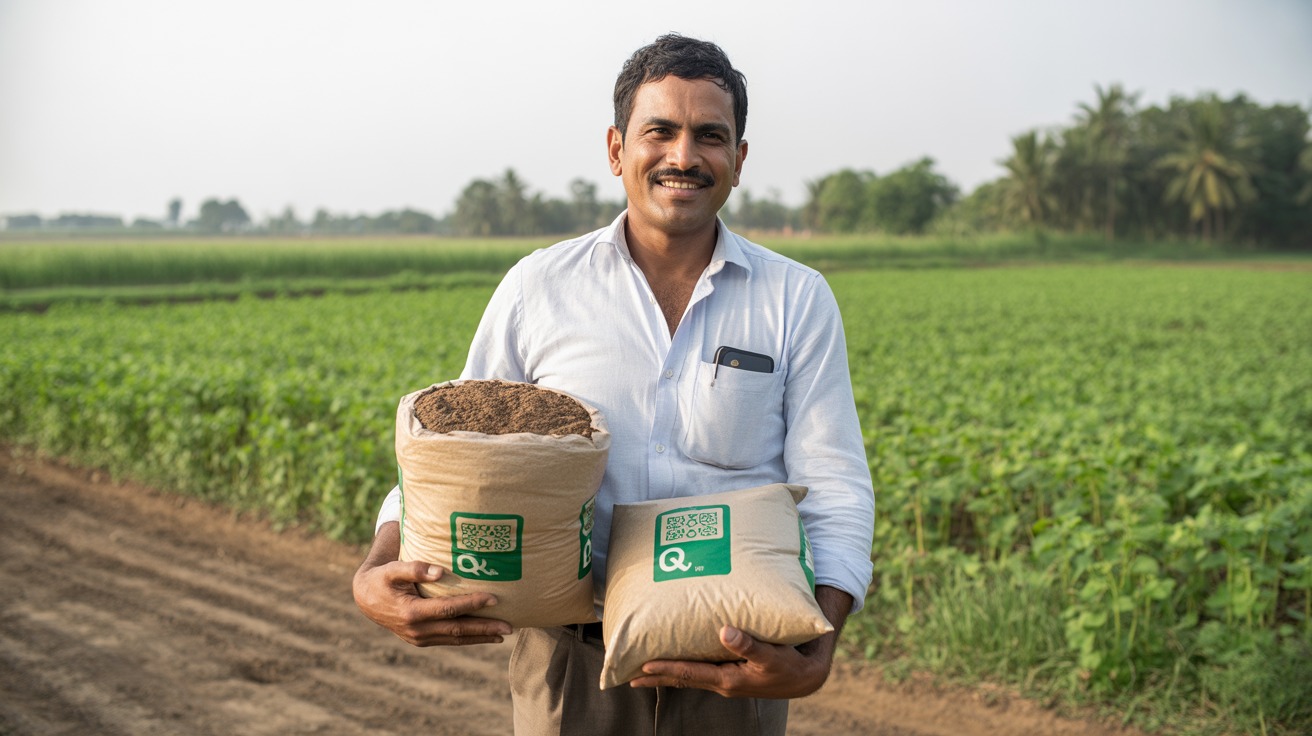
Quality is no longer an abstract promise in India’s agri‑export strategy. It is now measured, documented, and verified through soil to shipment digital traceability for Indian agri exporters. APEDA has described a digital framework that tracks produce “right from the soil to the shipment,” which signals a structural shift in how export compliance and buyer trust are built. What began with a limited set of commodities is steadily expanding across crops, regions, and export programmes, so soil‑to‑shipment traceability is becoming a foundation rather than a niche initiative.
Why Soil to Shipment Digital Traceability Matters Now
Global buyers, regulators, and certification bodies are moving faster than ever. Import markets increasingly expect exporters to provide verifiable proof within hours, not weeks, covering origin, inputs, testing, and movement history. APEDA’s traceability initiative started with grapes and now includes rice and peanuts, with further coverage expected across other crops. As a result, traceability can no longer live in spreadsheets, PDFs, or disconnected systems; it must work as a repeatable operational workflow that reduces shipment risk, speeds up audits, and strengthens buyer confidence.
For Indian agri exporters, this shift means soil to shipment digital traceability is the most practical way to stay aligned with APEDA’s direction and changing market expectations.
From Documentation to Defensible Proof
Traditional export documentation often concentrates on end‑stage paperwork such as certificates, invoices, and test reports created just before shipment. Soil‑to‑shipment traceability changes this logic. Instead, it emphasises continuity: each stage of the value chain is digitally connected so exporters can show not only what was shipped, but also how it was produced, handled, tested, and moved. Buyers increasingly interpret this continuity as credibility, especially when they must assess risk quickly.
The Compliance Pressure Point: MRL Volatility
One of the most persistent challenges for Indian agri exporters is the frequent revision of Maximum Residue Limit (MRL) thresholds by importing countries. When MRL requirements change, exporters must quickly answer critical questions: which farms contributed to a lot, what inputs were used, when they were applied, which tests were conducted, and where else that lot may have been shipped. Without structured traceability, teams rely on manual searches and scattered files. With soil‑to‑shipment digital traceability in place, exporters can retrieve full lot history, linked test evidence, and shipment mapping as a single, defensible trail.
What a Soil to Shipment Traceability Record Should Contain
To align with APEDA’s direction, exporter‑grade soil to shipment digital traceability for Indian agri exporters should include several core elements.
- Verified farm or plot identification linked to individual growers or FPOs
- Geo‑referenced location data and standardised farmer profiles
- Lot or batch creation at harvest or aggregation with unique IDs that persist through the supply chain
- Time‑stamped digital records of receiving, grading, packing, storage, internal movement, and dispatch
- Quality and residue testing documents directly linked to the relevant lot or consignment
- Consignment‑to‑shipment mapping that clearly shows what product went into which shipment and where else that lot travelled
When these components sit in one system, exporters gain a clear “soil to shipment” story for each consignment.
Common Gaps Exporters Still Face
Despite this clarity, many exporters still face fragmentation. Lot creation may happen on paper, testing reports may sit in email threads, and movement records may be captured inconsistently across packhouses and warehouses. These gaps often surface only during audits, buyer complaints, or shipment holds—precisely when it is hardest to respond calmly. Soil‑to‑shipment traceability closes these gaps by enforcing structure and continuity across operations.
What Exporters Should Prioritise in the Next 30 Days
APEDA’s signals suggest exporters should act now instead of waiting for commodity‑specific mandates. In the next 30 days, Indian agri exporters can focus on a few practical priorities to move towards soil to shipment digital traceability.
- Standardise lot creation rules: decide when a lot is created, who creates it, and which data fields are mandatory.
- Make testing evidence searchable by lot or consignment, not by date or email subject line.
- Capture every physical movement event at source locations such as packhouses, cold stores, and dispatch points.
- Run a “24‑hour retrieval drill” to see whether the team can produce complete lot history, linked test reports, and shipment mapping within one working day.
These steps not only support compliance but also create a culture of traceable operations.
Operational Benefits Beyond Compliance
Compliance is often the initial driver for traceability projects. However, exporters who implement soil‑to‑shipment digital traceability frequently see broader operational gains. Disputes with buyers become easier to resolve, internal accountability improves, and repeat buyers gain confidence in the exporter’s systems. Over time, traceability shifts from a defensive requirement to a commercial advantage that supports pricing, access to premium markets, and stronger long‑term relationships.
How Trace AgTech Supports Exporter Workflows
Trace AgTech helps exporters move from paper registers and scattered files to a structured, lot‑based digital traceability workflow. The platform is designed around exporter operations, linking farm data, lot creation, testing evidence, and shipment trails into a single system. As a result, soil to shipment digital traceability for Indian agri exporters becomes practical: teams can respond faster to audits, reduce compliance risk, and generate export‑ready evidence on demand.
Conclusion
Soil-to-shipment traceability is no longer about future readiness—it is about present resilience for Indian agri exporters.
As APEDA’s digital traceability framework expands, exporters who invest early in structured, lot-based systems will be better prepared for audits, buyer scrutiny, and evolving compliance expectations Book a Demo to see how this workflow looks in practice.

Any comments?