
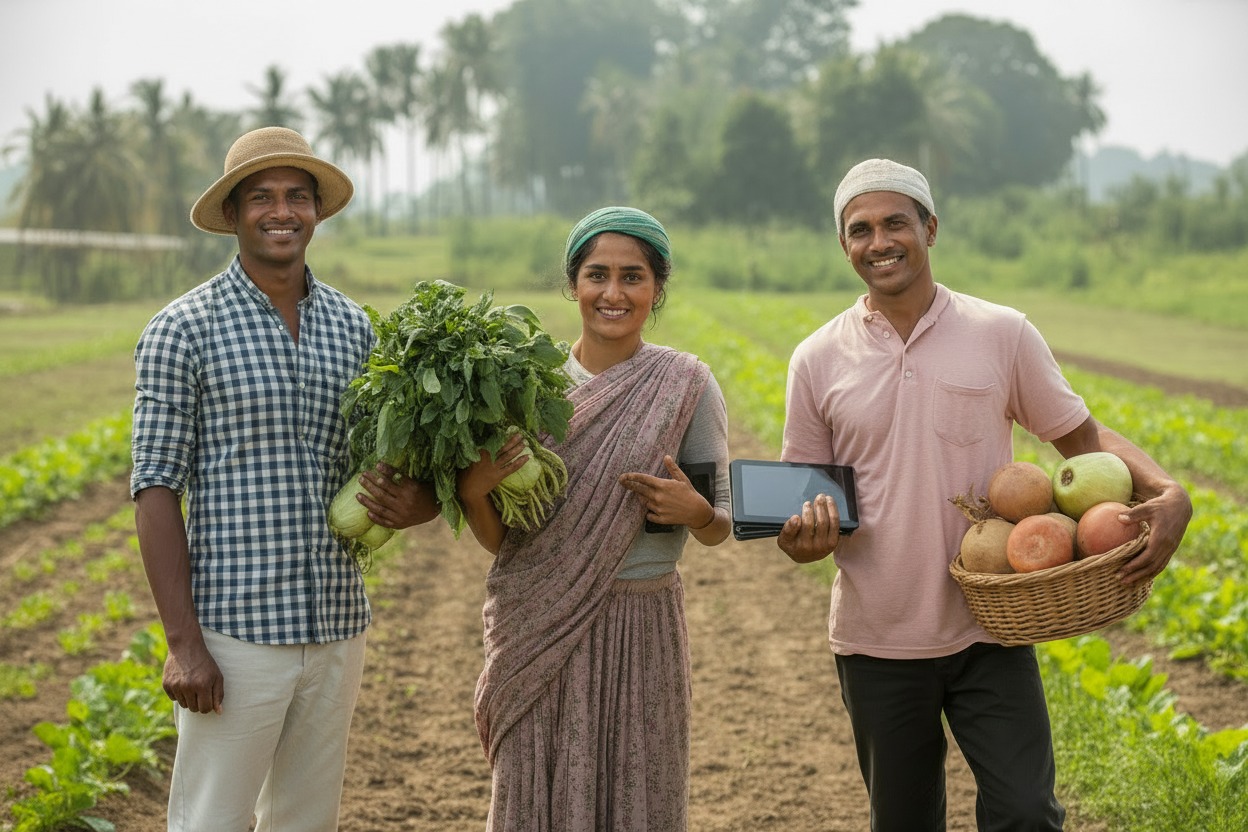
Digital Farm Data: The Backbone of Sustainable Agri Supply Chains
In 2026, digital farm records for sustainability are no longer optional—they are the foundation of resilient, compliant, and environmentally responsible supply chains.
Buyers, regulators, and auditors are increasingly demanding proof of sustainable practices at the farm level, not just claims on paper.
Why Sustainability Demands Digital Farm Records
Traditional reporting on sustainability often relies on aggregated estimates or manual logs. This approach cannot satisfy real-time ESG audits or buyer verification.
Digital farm records for sustainability capture accurate, activity-level data that can be verified, time-stamped, and geo-tagged, providing an indisputable record of responsible farming practices.
1. Traceable Input Usage
- Exact amounts of fertilizers, pesticides, and water applied per crop cycle
- Verified application dates linked to farm plots
- Automated calculation of environmental impact per lot
2. Operational Transparency
- Activity logs that show who did what and when
- Role-based approvals to ensure accountability
- Integration with procurement, storage, and shipment systems
3. ESG-Ready Reporting
Auditors and certification bodies now expect rapid evidence of sustainability practices. Platforms like FAO Sustainability emphasize traceable farm-level data for reliable ESG reporting.
Traditional vs Sustainable Digital Farm Records
| Aspect | Traditional Records | Digital Farm Records for Sustainability |
|---|---|---|
| Data capture | Manual, periodic | Real-time, activity-level |
| Traceability | Lot-level only | Farm plot and activity-level |
| ESG reporting | Estimated or aggregated | Verified, evidence-based |
| Audit readiness | Reactive | Continuous and verifiable |
| Operational efficiency | Low | High, integrated with workflow |
How Digital Farm Records Drive Sustainable Practices
- Track crop rotation and soil health metrics automatically
- Monitor water and fertilizer use to reduce environmental impact
- Generate ESG reports linked directly to field-level activity data
- Enable faster decision-making for sustainability improvements
Where Most Supply Chains Fall Short
Many agribusinesses still rely on spreadsheets, disconnected software, or manual reporting. This leads to:
- Inconsistent sustainability records
- Slow audit responses
- Difficulty proving compliance to buyers or regulators
By using digital farm records for sustainability, organizations can consolidate all farm, lot, and shipment data into a single verifiable system.
Operational Benefits Beyond Compliance
- Reduce rejection risk from sustainability-conscious buyers
- Streamline internal operations and reporting
- Strengthen market positioning for premium, sustainable products
- Build trust with ESG auditors and stakeholders
Implementing Digital Farm Records Today
Platforms like Trace AgTech embed sustainability tracking into routine farm workflows, allowing agribusinesses to:
- Capture activity-level data in real-time
- Link farm records to lot creation, testing, and shipment
- Generate audit-ready ESG reports on demand
Request a demo to see digital farm records in action
Conclusion: Making Sustainability Measurable and Verifiable
Sustainability is no longer optional—it drives market access, compliance, and long-term business value. With digital farm records for sustainability, agribusinesses can:
- Record every farm activity in real-time for transparency and accountability
- Generate audit-ready ESG reports quickly and efficiently
- Optimize operations while ensuring compliance and traceability
Adopting digital farm records transforms sustainability from a goal into measurable, verifiable results.
Request a demo to see how your operations can become fully traceable and ESG-ready

Any comments?