
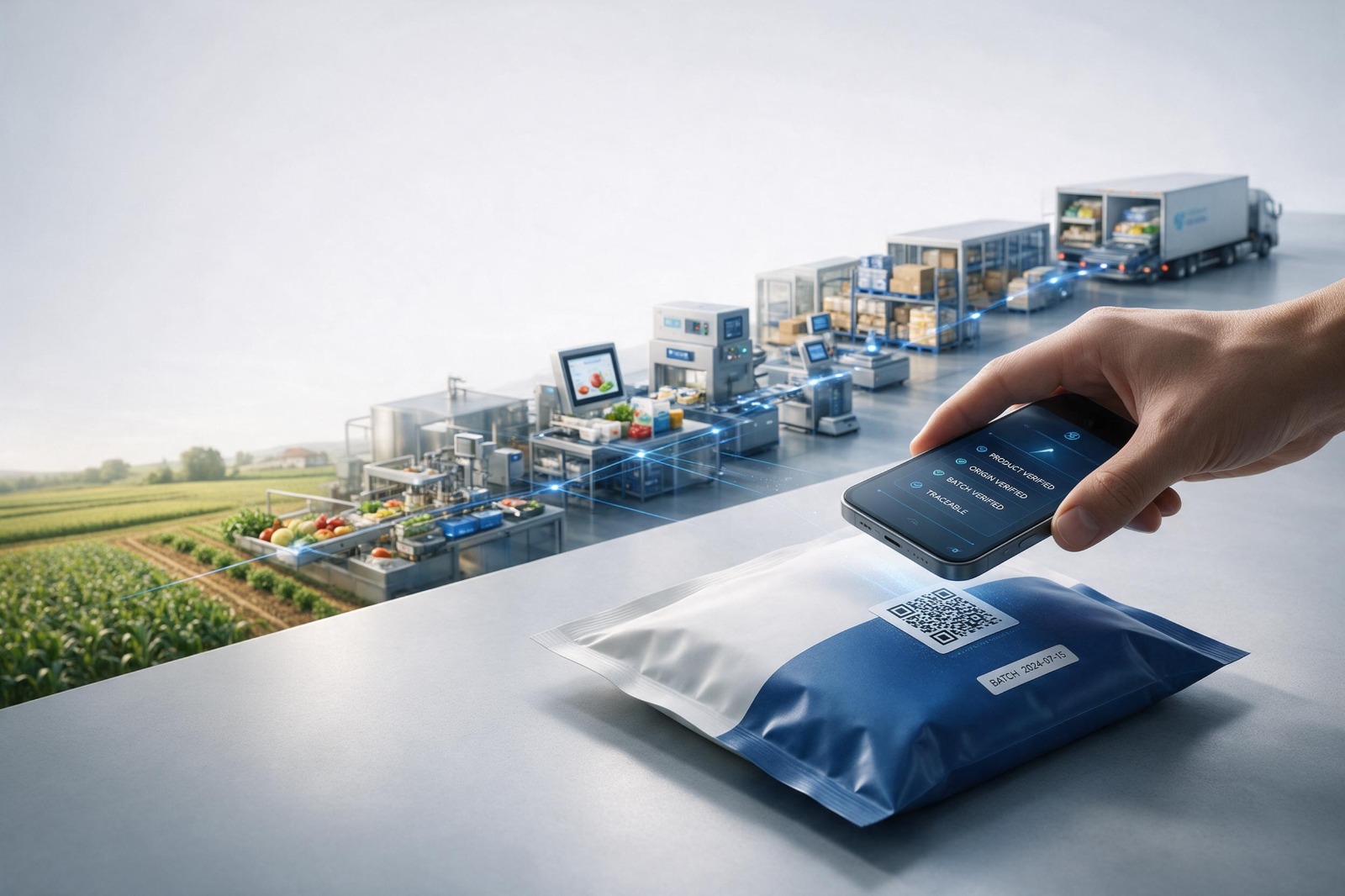
What Is Food Fraud?
Food fraud occurs when someone deliberately changes, replaces, or misrepresents a food product for financial gain.
Common examples include food adulteration, product substitution, false origin claims, misleading labels, incorrect batch information, counterfeit products, and fake quality or certification records.
These practices can affect food safety and damage consumer trust.
Why Is Food Fraud Difficult to Detect?
Modern food supply chains are complex. A product can move through farms, suppliers, processors, warehouses, distributors, and retailers.
Each stage may use different systems to store information. Some businesses still depend on paper records and spreadsheets.
As a result, important information can become difficult to connect. This makes it harder to identify where a problem started.
How Does Digital Traceability Help?
Digital traceability creates a connected record of a product throughout its journey.
The process can include:
Farm Data → Procurement → Batch → Processing → Quality Check → Shipment → Distribution
This gives businesses better visibility across the supply chain.
Track Products From the Farm
Traceability can start at the farm level. Businesses can record important information about the source of a product.
This may include:
• Farmer details
• Farm location
• Crop information
• Harvest date
• Harvest quantity
• Cultivation activities
• Inputs used
• Certification details
These records help businesses understand where products came from.
They can also make origin verification easier.
Connect Suppliers With Procurement Data
Procurement data is another important part of traceability.
A digital system can connect suppliers with the products they provide.
For example:
Supplier → Farm → Product → Quantity → Date → Batch
This connection allows teams to compare information across different stages.
It can also help identify unusual changes in quantities or product records.
Create Digital Batch Records
Batch tracking is essential for food traceability.
A digital batch record can contain information such as:
• Product source
• Supplier
• Production date
• Quantity
• Processing details
• Quality checks
• Packaging information
• Storage details
• Shipment information
• Destination
Businesses can use these records to follow products from their source to their destination.
Make Product Information Easier to Verify
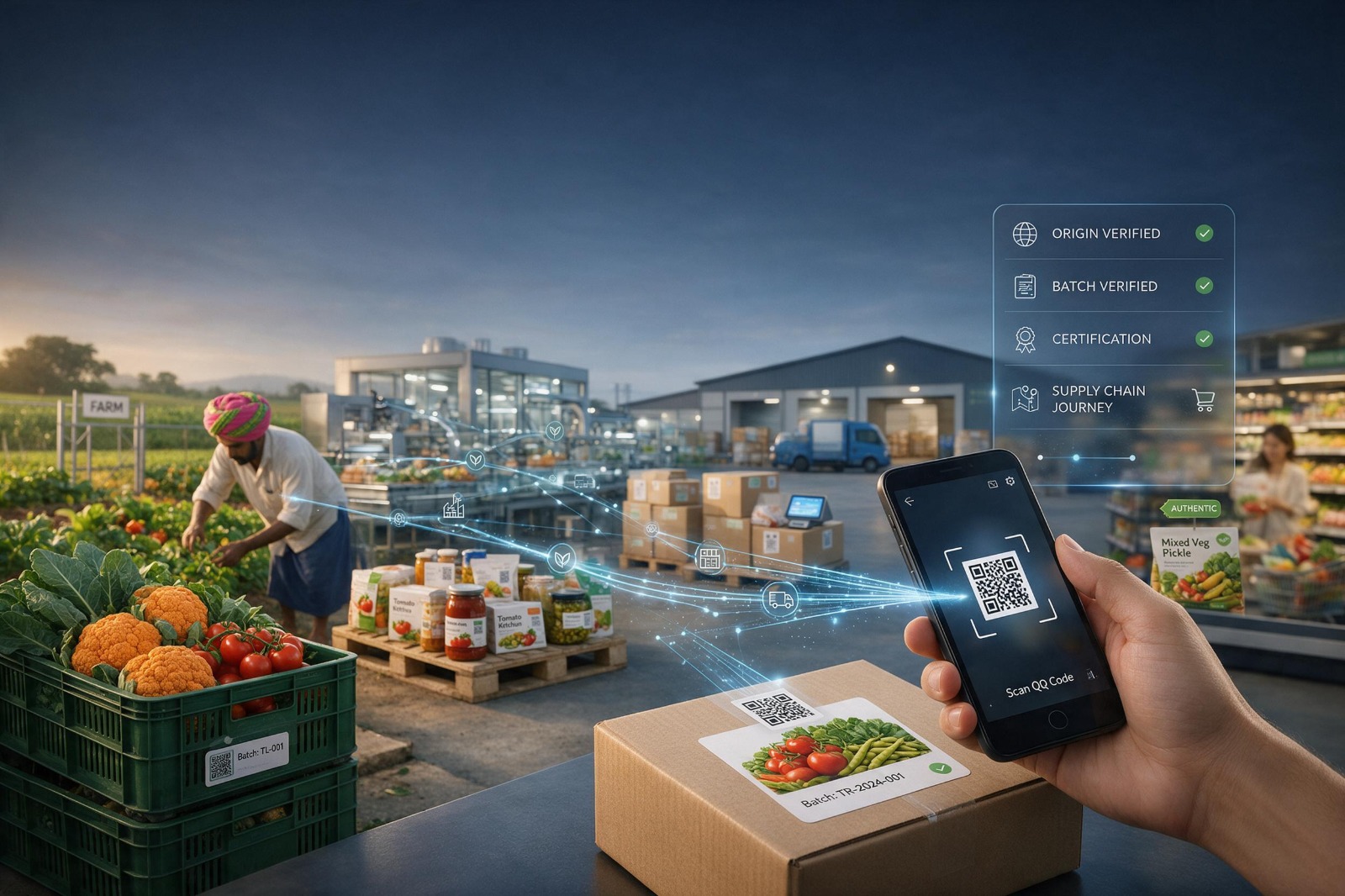
QR codes can connect physical products with digital records.
A customer or supply-chain partner can scan a QR code to access available product information.
Depending on the system, this may include product origin, batch details, quality information, processing history, and certification information.
This creates a direct connection between the physical product and its digital record.
Identify Data Gaps
Digital records can make it easier to compare information.
For example, a supplier may record 10,000 kg of a product. However, another production record may show 15,000 kg.
Such differences may need further investigation.
Connected data helps businesses identify these gaps and check the relevant records.
Improve Food Safety Response
Food safety problems require quick action.
Traceability can help businesses identify the source of an affected product. Teams can also check the relevant batch and follow its movement through the supply chain.
This information can support a more targeted recall.
Businesses can focus on affected batches instead of checking every product.
Build Consumer Trust
Consumers want to know more about the food they purchase.
They may ask:
Where did the product come from?
Who produced it?
How was it handled?
Can its origin be verified?
Digital traceability can help businesses provide clearer answers.
Better product information can also support stronger trust between businesses, partners, and consumers.
Technology Alone Is Not Enough
Digital traceability is not a complete solution to food fraud.
The quality of the system depends on the quality of the data. Incorrect information can still create problems.
Businesses also need strong processes and regular checks. Supplier controls and data verification are equally important.
Technology works best when it supports good supply-chain practices.
The Future of Digital Food Traceability
Technology is making food traceability more advanced.
Artificial intelligence can help analyse large amounts of supply-chain data. IoT devices can collect information from connected equipment and environments.
RFID can support automated product identification. Blockchain can also provide an additional layer of record sharing and data integrity in suitable applications.
These technologies can work together with digital traceability systems.
The goal is no longer only to answer:
“Where did this product come from?”
The bigger question is:
“What happened to this product at every stage of its journey?”
Building a More Transparent Food Supply Chain
Food fraud will remain a challenge as supply chains become more complex.
Businesses need better visibility to identify unusual activity and verify product information.
Digital traceability can connect farm data, procurement records, batch information, quality checks, and distribution details.
This creates a more connected view of the product journey.
Make Your Supply Chain More Traceable
Trace Agtech helps businesses connect farm-level data, procurement information, quality records, batch tracking, and supply-chain information through a digital traceability platform.
Better visibility can help businesses build stronger processes and improve supply-chain transparency.
Make every stage visible. Make every product traceable.

Any comments?