
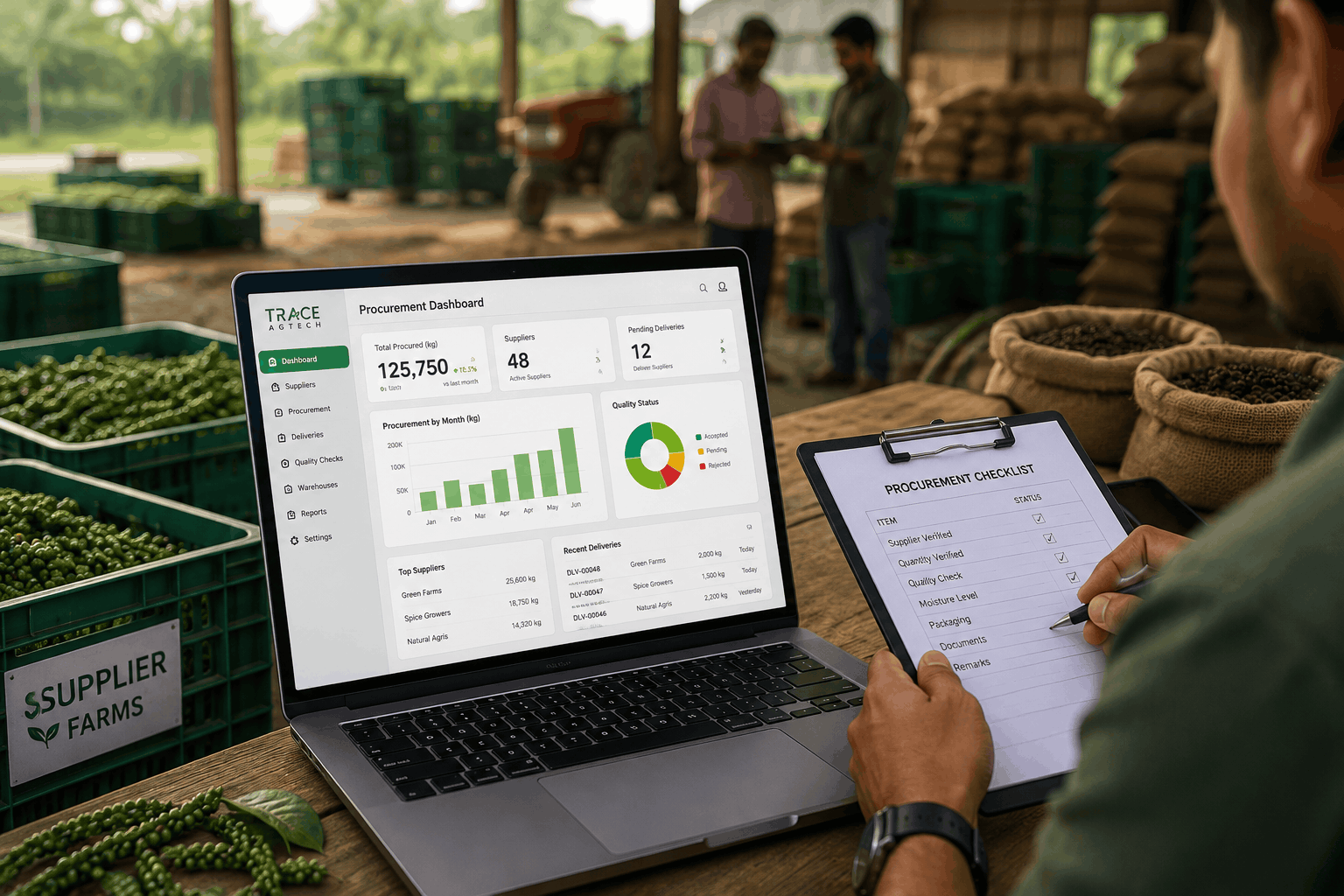
Agricultural procurement involves more than buying crops from suppliers. Teams must track suppliers, monitor quantities, verify product quality, manage deliveries, and maintain accurate records.
However, when information is spread across spreadsheets, paper documents, and separate systems, managing procurement becomes difficult. Delays and missing information can affect business decisions.
Real-time visibility into agricultural supply chains helps businesses connect procurement data, improve coordination, and make informed decisions.
What Is Agricultural Procurement Visibility?
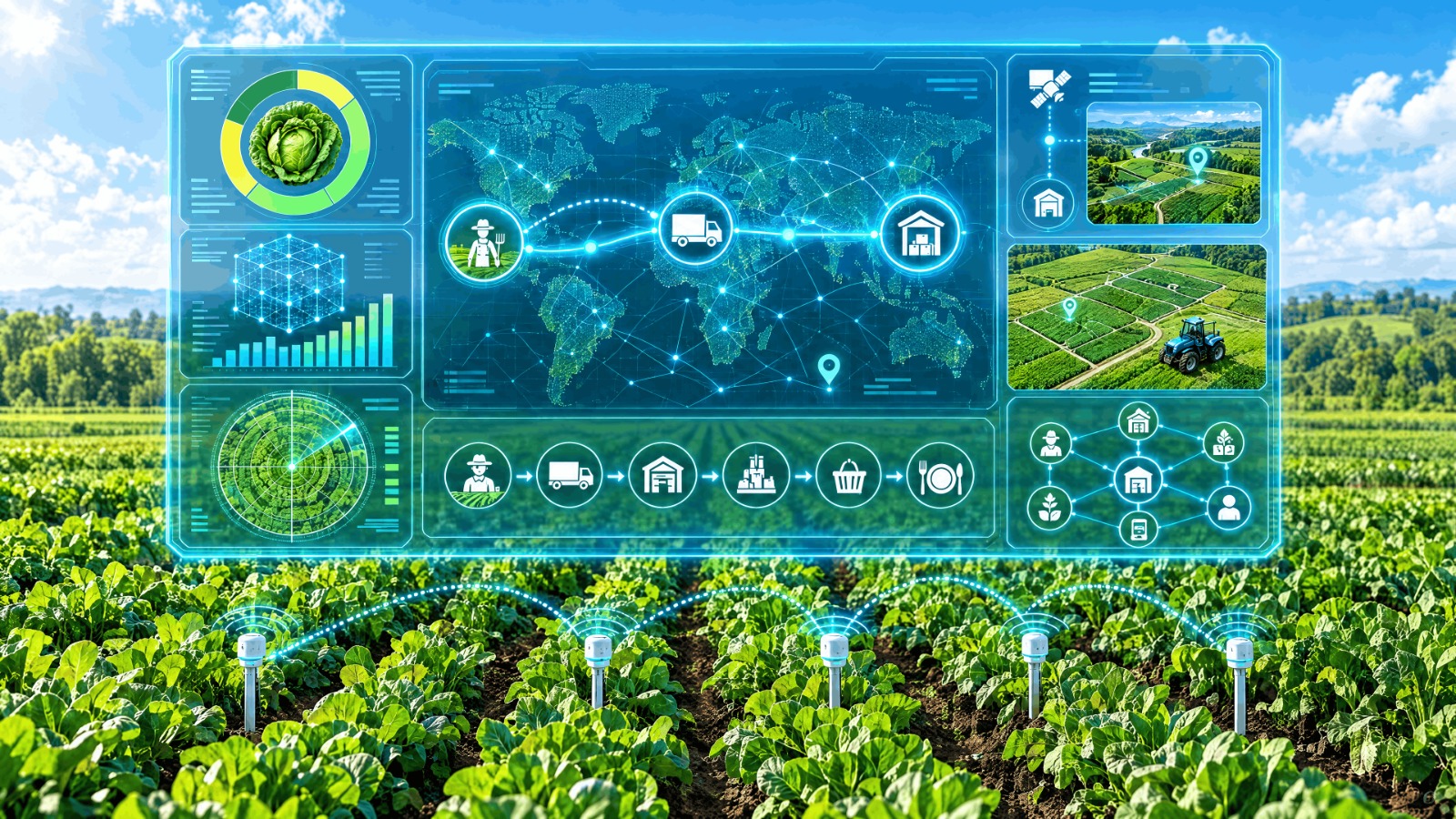
Agricultural procurement visibility means having access to reliable information about suppliers, farm produce, purchase quantities, deliveries, and product quality.
Instead of depending on scattered records, procurement teams can view important information in one connected system.
For example, a team may need to know which supplier provided a particular crop, how much produce was collected, when it arrived, and whether it passed quality checks.
When this information is easy to access, teams can monitor procurement activities more effectively.
Why Is Procurement Visibility Important?
Agricultural supply chains involve multiple people, locations, and processes. Without connected data, even routine procurement activities can become time-consuming.
1. Track Supplier Performance
Procurement teams often work with multiple farmers, aggregators, and suppliers. Each supplier may deliver different quantities and product grades.
A digital procurement system can help teams maintain supplier records, monitor deliveries, and review past transactions.
This makes it easier to identify reliable suppliers and investigate recurring issues.
2. Monitor Procurement Quantities
Accurate quantity records are essential when purchasing agricultural produce.
For example, a supplier may confirm a delivery of 5,000 kg, while the quantity recorded at the collection centre may be different.
Connected procurement records help teams compare expected and received quantities. They can then investigate discrepancies before those differences affect inventory or payment records.
3. Improve Delivery Coordination
Harvest schedules, transport arrangements, and delivery times can change quickly.
Without timely updates, procurement teams may struggle to coordinate collections and manage incoming produce.
Access to current procurement information helps teams understand what has been collected, what is expected, and which deliveries may need attention.
This supports better planning across the supply chain.
4. Connect Procurement With Quality Records
Buying agricultural produce is not only about quantity. Quality also matters.
Procurement teams may need information about crop grade, inspection results, moisture levels, or other product-specific quality checks.
When quality records are linked to supplier and procurement details, teams can make better-informed decisions about incoming produce.
This connection also helps businesses trace quality issues back to the relevant supplier or batch.
5. Reduce Manual Work and Data Errors
Paper records and separate spreadsheets can create duplicate entries, missing information, and reporting delays.
Employees may spend valuable time collecting data from different sources instead of focusing on procurement decisions.
A connected digital system can reduce repetitive data entry and make records easier to access. Standardised data collection can also improve consistency across teams.
6. Strengthen Traceability From Farm to Business
Procurement is a key link between farm-level production and the next stage of the supply chain.
When supplier information is connected with farm records, crop details, quantities, and batch information, businesses can build a clearer picture of where products originated.
This creates a stronger foundation for end-to-end agricultural traceability.
What Happens When Procurement Data Is Disconnected?
Consider an agricultural business that sources pepper from several suppliers.
The procurement team maintains purchase records in a spreadsheet. The warehouse stores incoming quantities in another file, while quality inspection results are saved separately.
When a discrepancy appears, employees must compare each record manually. Finding the source of the problem can take time.
Now imagine those records are connected in one digital system.
The team can review supplier details, delivery quantities, batch information, and quality results together. This makes it easier to investigate discrepancies and identify the records that need attention.
The key difference is not just having more data. It is being able to connect and use that data when decisions need to be made.
How Digital Traceability Improves Procurement Management
Digital traceability connects information from different stages of agricultural production and sourcing.
A connected workflow may look like this:
Farm Records → Supplier Information → Procurement → Quality Checks → Batch Tracking → Processing
Each stage adds useful information to the product’s digital history.
With this approach, businesses can:
- Access supplier and procurement records more easily.
- Compare planned and received quantities.
- Connect incoming produce with quality information.
- Follow products across different stages.
- Investigate discrepancies using linked records.
- Improve visibility for reporting and audits.
The exact benefits depend on the quality of the data collected and how consistently teams use the system.
What Should an Agricultural Procurement Dashboard Show?
A useful procurement dashboard should present information that helps teams take action.
Depending on the business, important information may include:
- Total quantity procured
- Supplier-wise procurement
- Incoming and completed deliveries
- Pending collections
- Quality inspection status
- Batch-level product information
- Quantity discrepancies
- Procurement trends over time
A well-organised dashboard can help managers identify issues without searching through multiple files.
It can also support better coordination between procurement, warehouse, quality, and management teams.
Why Procurement Visibility Matters for Agricultural Exporters
Agricultural exporters need reliable records throughout the sourcing process.
Depending on the product and destination market, businesses may need to maintain information about product origin, suppliers, quality checks, batches, and supporting documentation.
Connected procurement and traceability records can help teams retrieve this information more efficiently.
They can also support internal checks and help businesses respond to customer or audit requests. However, software alone does not guarantee compliance. Exporters must still meet the specific requirements that apply to their products and markets.
How Trace Agtech Supports Procurement Visibility
Trace Agtech helps agricultural businesses connect farm-level information, procurement data, quality records, and batch tracking within a digital traceability workflow.
By bringing important records together, businesses can improve visibility across sourcing and supply-chain activities.
Teams can use connected information to understand product origins, review procurement records, and follow products through relevant stages of the supply chain.
For businesses managing multiple suppliers, farms, or product batches, this visibility can support more organised and informed decision-making.
Final Thoughts
Agricultural procurement becomes harder to manage when important information is scattered across different systems.
Real-time visibility helps businesses connect supplier records, delivery quantities, quality information, and product batches. It can reduce the effort required to find information and support faster investigation of discrepancies.
For agricultural businesses aiming to improve efficiency and traceability, connected procurement data is an important step towards a more transparent supply chain.
Better procurement visibility starts with better-connected data.
Make Your Agricultural Supply Chain More Visible
Trace Agtech helps businesses improve agricultural traceability by connecting farm-level data, procurement information, quality records, and batch tracking.
Explore how Trace Agtech can help your business build a more connected and transparent supply chain.

Any comments?