
Farm Traceability Software: Boost Food Safety & Compliance
Introduction
In today’s globalized food system, ensuring food safety and compliance has become a critical priority for farmers, food processors, and regulatory bodies. Consumers demand transparency regarding the origins of their food, while governments impose strict regulations to minimize foodborne illnesses, contamination, and fraud. This is where farm traceability software comes into play. By leveraging digital tools to track and monitor agricultural products from farm to fork, traceability software enhances food safety, streamlines compliance, and improves operational efficiency across the supply chain.
Understanding Farm Traceability Software
Farm traceability software is a digital solution designed to track the entire lifecycle of agricultural products. From seed selection and planting to harvesting, processing, and distribution, this software captures and records essential data, ensuring that each step of the supply chain is transparent and verifiable. By integrating technologies such as blockchain, the Internet of Things (IoT), artificial intelligence (AI), and cloud computing, traceability software provides real-time insights that empower farmers, food processors, retailers, and consumers alike.
Key Benefits of Farm Traceability Software
1. Ensuring Food Safety Through Real-Time Monitoring
One of the most significant advantages of farm traceability software is its ability to enhance food safety. By monitoring every stage of the food production process, the software ensures that food is produced, stored, and transported under safe conditions. Key aspects include:
- Tracking pesticide and chemical usage: Farmers can log every pesticide application, ensuring compliance with safety standards and reducing the risk of harmful residues in food products. This data can be analyzed to ensure that only approved chemicals are used, preventing the overuse of harmful substances that can impact both human health and the environment.
- Monitoring soil and water quality: Sensors integrated with traceability software provide real-time data on soil nutrients, irrigation quality, and potential contaminants. This allows farmers to take corrective actions promptly, ensuring that crops are grown under optimal conditions while minimizing environmental degradation.
- Temperature and storage tracking: Perishable goods require precise temperature control. Traceability systems monitor cold storage and transport conditions, reducing spoilage and preventing foodborne illnesses. These systems send alerts if temperature thresholds are breached, allowing immediate corrective actions to be taken.
2. Facilitating Rapid Recalls and Risk Management
Food contamination incidents can have severe consequences, leading to public health risks, brand damage, and legal repercussions. Farm traceability software enables:
- Quick identification of contamination sources: In the event of a food safety issue, businesses can pinpoint affected batches and recall them swiftly, minimizing consumer exposure to unsafe products. This prevents widespread recalls that can harm an entire industry and ensures that only affected items are removed from circulation.
- Efficient recall management: Automated alerts and detailed tracking history allow food producers to isolate contaminated products without disrupting the entire supply chain. This minimizes financial losses and prevents unnecessary waste.
- Risk assessment tools: Advanced analytics help farmers and processors identify potential hazards before they escalate, improving overall risk management. By analyzing past data, the system can predict potential risks based on trends and previous incidents, allowing preventive measures to be taken.
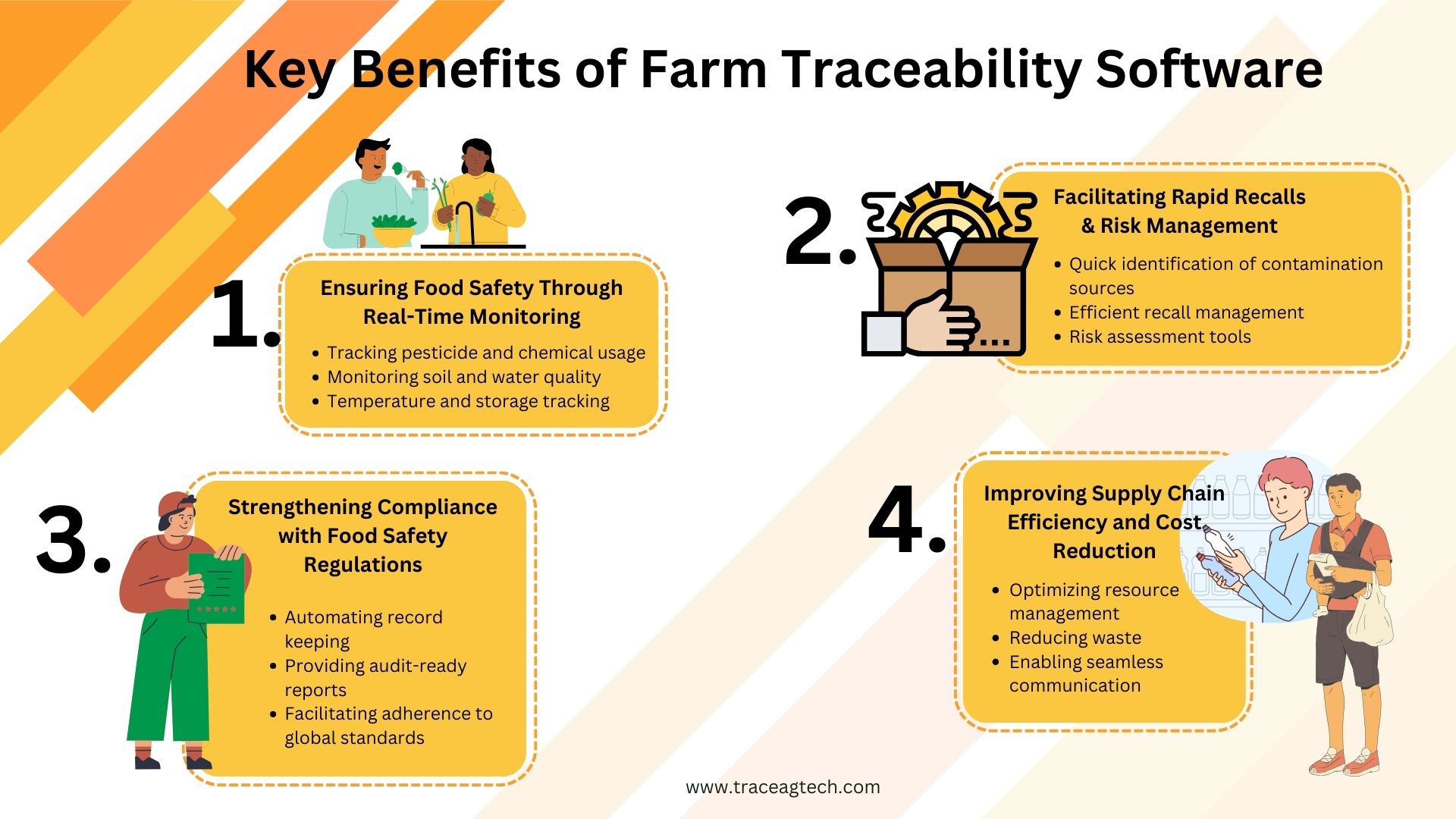
3. Strengthening Compliance with Food Safety Regulations
Regulatory agencies such as the FDA (Food and Drug Administration), USDA (United States Department of Agriculture), and the European Food Safety Authority (EFSA) have stringent requirements for food traceability. Farm traceability software helps farmers and agribusinesses meet these compliance standards by:
- Automating record-keeping: Digital logs reduce paperwork and ensure accuracy in compliance documentation. Farmers can store data on crop treatments, harvesting, storage, and distribution in a centralized system, making it easier to provide necessary records during audits.
- Providing audit-ready reports: Regulatory bodies often require proof of compliance during inspections. Traceability software generates comprehensive reports that meet legal requirements, reducing the risk of penalties and product rejections.
- Facilitating adherence to global standards: Many international markets require specific traceability protocols for food exports. Farm traceability software helps businesses comply with certifications such as Global GAP, HACCP, and FSMA, ensuring smooth trade operations and enhancing market access.
4. Enhancing Consumer Trust and Transparency
Modern consumers are increasingly conscious of where their food comes from and how it is produced. Farm traceability software enhances transparency by:
- Providing QR codes for end consumers: Shoppers can scan QR codes on product packaging to access information about the farm, production methods, and sustainability practices. This allows them to make informed purchasing decisions and supports brands that align with their values.
- Building brand loyalty: Companies that demonstrate a commitment to food safety and ethical sourcing gain consumer trust, resulting in repeat business and positive brand reputation. Transparent supply chains reassure customers that they are buying safe and responsibly produced food.
- Reducing food fraud: Traceability software verifies the authenticity of organic, non-GMO, and fair-trade claims, preventing mislabeling and fraud. This helps consumers avoid misleading labels and ensures that they receive exactly what they are paying for.
Improving Supply Chain Efficiency and Cost Reduction
Beyond food safety and compliance, traceability software also enhances operational efficiency:
- Optimizing resource management: Farmers can analyze data on crop performance, weather patterns, and input usage to improve productivity. By using predictive analytics, they can make data-driven decisions on when and how to plant, fertilize, and harvest crops for maximum yield.
- Reducing waste: By tracking inventory levels and expiration dates, agribusinesses can minimize food waste and increase profitability. This is particularly beneficial in reducing post-harvest losses, which can significantly impact revenue.
- Enabling seamless communication: Supply chain stakeholders, from farmers to retailers, can access real-time data, reducing delays and improving coordination. This allows for better logistics planning, ensuring that products reach the market in optimal condition.
Challenges in Implementing Farm Traceability Software
Despite its many benefits, the adoption of farm traceability software comes with challenges:
- High initial investment: Implementing traceability systems requires significant financial resources, especially for small-scale farmers. Government subsidies and incentives may be necessary to encourage wider adoption.
- Technological barriers: Many farmers lack the technical knowledge or digital infrastructure needed to adopt new technologies. Training programs and user-friendly interfaces can help bridge this gap.
- Data security concerns: Protecting sensitive farm data from cyber threats is crucial for maintaining trust in traceability systems. Strong cybersecurity measures must be implemented to safeguard information from unauthorized access.
- Regulatory variations: Different countries have unique compliance requirements, making it challenging for global food producers to standardize traceability processes. Flexible software solutions that adapt to regional regulations can help overcome this obstacle.
The Future of Farm Traceability Software
As technology continues to evolve, the future of farm traceability software looks promising. Key trends include:
- AI-driven predictive analytics: Advanced AI will enable even more accurate risk assessments and yield predictions, helping farmers optimize production.
- Blockchain integration: Decentralized, tamper-proof record-keeping will further enhance transparency and security in the food supply chain, ensuring greater trust among stakeholders.
- Increased affordability and accessibility: Governments and agritech companies are working towards making traceability solutions more affordable and user-friendly for small farmers, ensuring widespread adoption.
- Sustainability tracking: Future software developments will include carbon footprint monitoring, water usage tracking, and biodiversity impact assessments, helping farmers adopt more sustainable practices.
Conclusion
Farm traceability software is transforming the agricultural industry by enhancing food safety, ensuring regulatory compliance, and improving supply chain efficiency. As consumers demand more transparency and governments enforce stricter food safety laws, the role of traceability software will become increasingly vital. While challenges exist, continued technological advancements and industry collaboration will drive the widespread adoption of farm traceability solutions, paving the way for a safer, more transparent, and sustainable food system.

Any comments?